What a Sump Pump Does
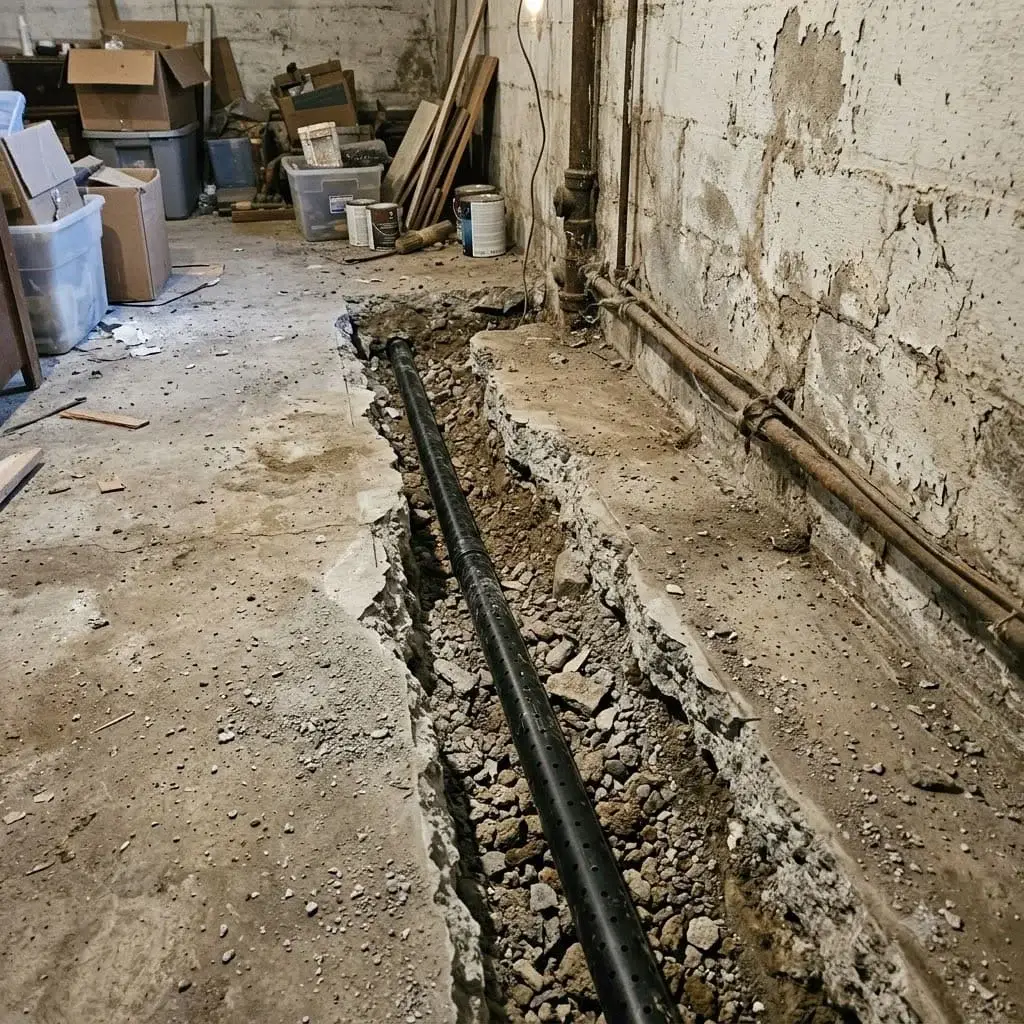
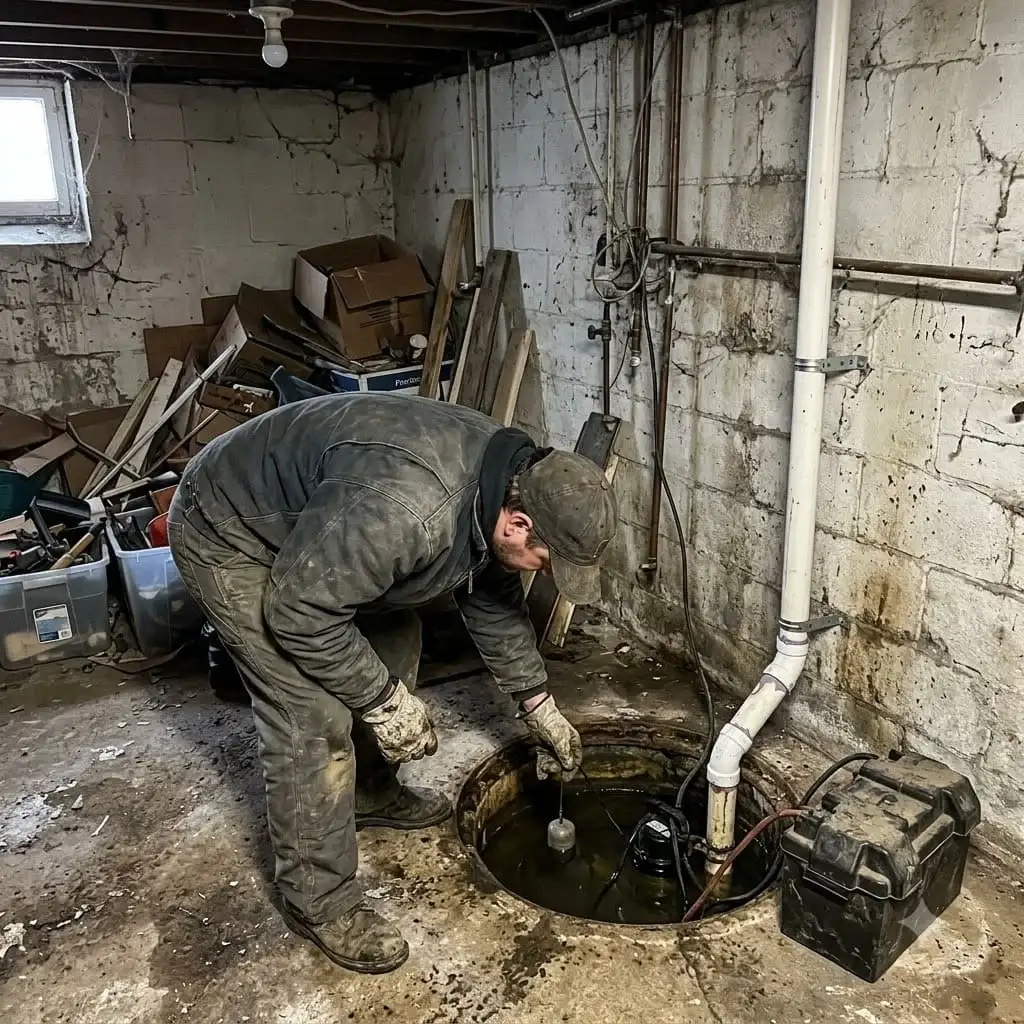
Water collected by the interior drain runs to a basin set in the lowest part of the basement. When the water reaches a set level, a float switch starts the pump, which pushes the water through a discharge line out of the house and away from the foundation. When the level drops, the pump shuts off. It runs only when it has to, which means most owners don't think about it until it matters. You can read how the whole system works on our page for interior drainage and sump pumps.
Why Sump Pumps Fail
A few causes account for most failures.
Power loss. A standard electric pump stops when the power goes out. Heavy rain and winter storms can take down power at the same time the water is rising fastest.
A stuck float switch. If the float jams against the side of the basin or gets tangled, the pump may not turn on, or may not turn off.
A clogged pump or basin. Silt, gravel, and debris can foul the intake or jam the impeller.
A blocked or frozen discharge line. If water can't leave the pipe outside, the pump runs and nothing moves. A discharge line that ends too close to the house or sits in a low spot is more likely to freeze or clog.
A failed check valve. The check valve keeps pumped water from flowing back into the basin. When it fails, the pump cycles over and over on the same water.
An undersized or worn-out pump. A pump that was never sized for the water the house sees, or one that has simply worn out, can't keep up in a heavy storm.
How to Test Your Sump Pump
A quick test shows whether the pump works before a storm tests it for you. Pour a few buckets of water slowly into the basin until the float rises. The pump should start, empty the basin, and shut off. Watch that the water leaves through the discharge line outside and doesn't run back in. Listen for grinding or rattling, and check that the float moves freely. Test it a few times a year, and before the wet season in particular. If it doesn't start, or it runs without moving water, have it looked at before the next storm.
Why a Battery Backup Matters
A battery backup pump is a second pump that runs on a battery when the main one can't. It starts when the power fails, or when the primary pump stops working, and keeps the basin from filling over. In a place where the same storms bring heavy rain and outages, the backup covers the exact moment a standard pump would stop. Basements that take on water often, and finished basements with things worth protecting, are the ones that gain the most.
The backup needs to be sized to the water the house sees, with a battery that can run long enough to get through an outage. An alarm that sounds when the water rises too high adds a warning when you're home. We size the backup to each home and not to a standard spec.
Keeping a Sump Pump Working
Some upkeep helps. Check that the basin is free of debris, the float moves, and the discharge line is clear and slopes away from the house. Keep the line from ending right at the foundation, where the water can run back toward the wall. Replace a pump that is noisy, runs constantly, or hasn't been tested in years, and replace the battery in a backup on the schedule the manufacturer gives. A pump that works in October is worth more than one you find out about in March.
When the Pump Isn't the Problem
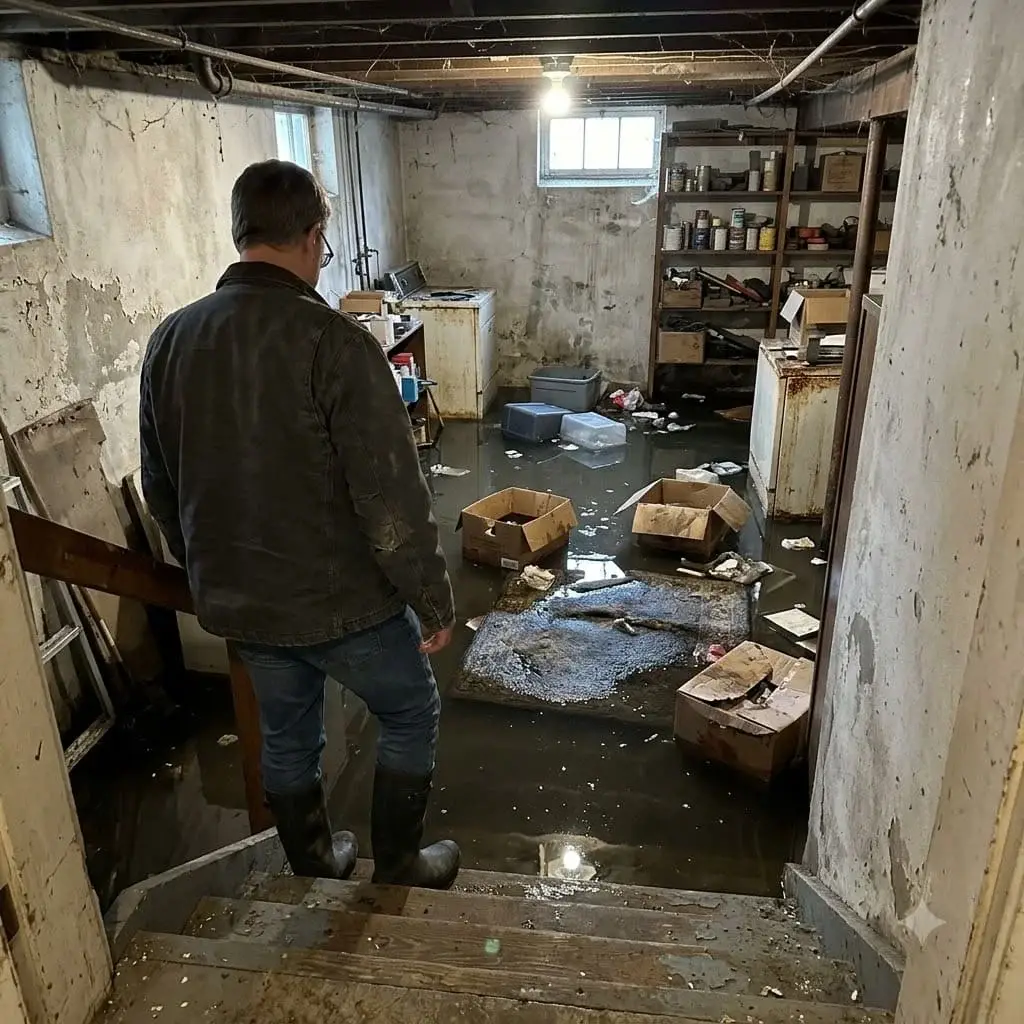
Sometimes the pump works and the basement still takes on water. If water gets around the drain, enters through the walls, or arrives faster than one pump can move it, the fix is a bigger system, and not a new pump. That might mean a longer drain, a second pump, or exterior waterproofing for a wall that leaks across its face. If your basement flooded, our guide to what to do in the first 24 hours covers the next steps.
Frequently Asked Questions
Why did my sump pump fail during a storm?
The most common cause is power loss, since a standard pump stops when the electricity does. Other causes include a stuck float switch, a clogged intake, a blocked or frozen discharge line, a failed check valve, and a pump that was too small or worn out. Testing the pump before the wet season and keeping the basin and discharge line clear prevent most failures.
How do I test my sump pump?
Pour several buckets of water into the basin until the float rises. The pump should start, empty the basin, and shut off, and the water should leave through the discharge line outside without running back in. Listen for grinding, and make sure the float moves freely. If the pump doesn't start or runs without moving water, have it checked before the next storm.
Do I need a battery backup sump pump?
A battery backup is worth having when the storms that flood your basement can also cut the power, since a standard pump stops the moment the grid goes down. It's most useful for basements that take on water regularly, and for finished basements with items worth protecting. A backup runs on battery through an outage and keeps the basin from filling over.
How long does a battery backup run?
The run time depends on the battery, the pump, and how much water is coming in, so it varies from home to home. A backup is sized to the home and the water it sees, and the battery should be maintained and replaced on the maker's schedule. We size the system at the inspection so it can cover the outages a home is likely to face.
My sump pump runs all the time. Is something wrong?
A pump that runs constantly can mean a lot of water is coming in, a failed check valve is letting water flow back into the basin, a stuck float is keeping the pump on, or the pump can't move water because the discharge line is blocked or frozen. Each has a different fix, so it's worth having the pump and the drainage looked at, especially if the basement has been taking on more water than before.