The Soil Holds the Water Against Your Walls
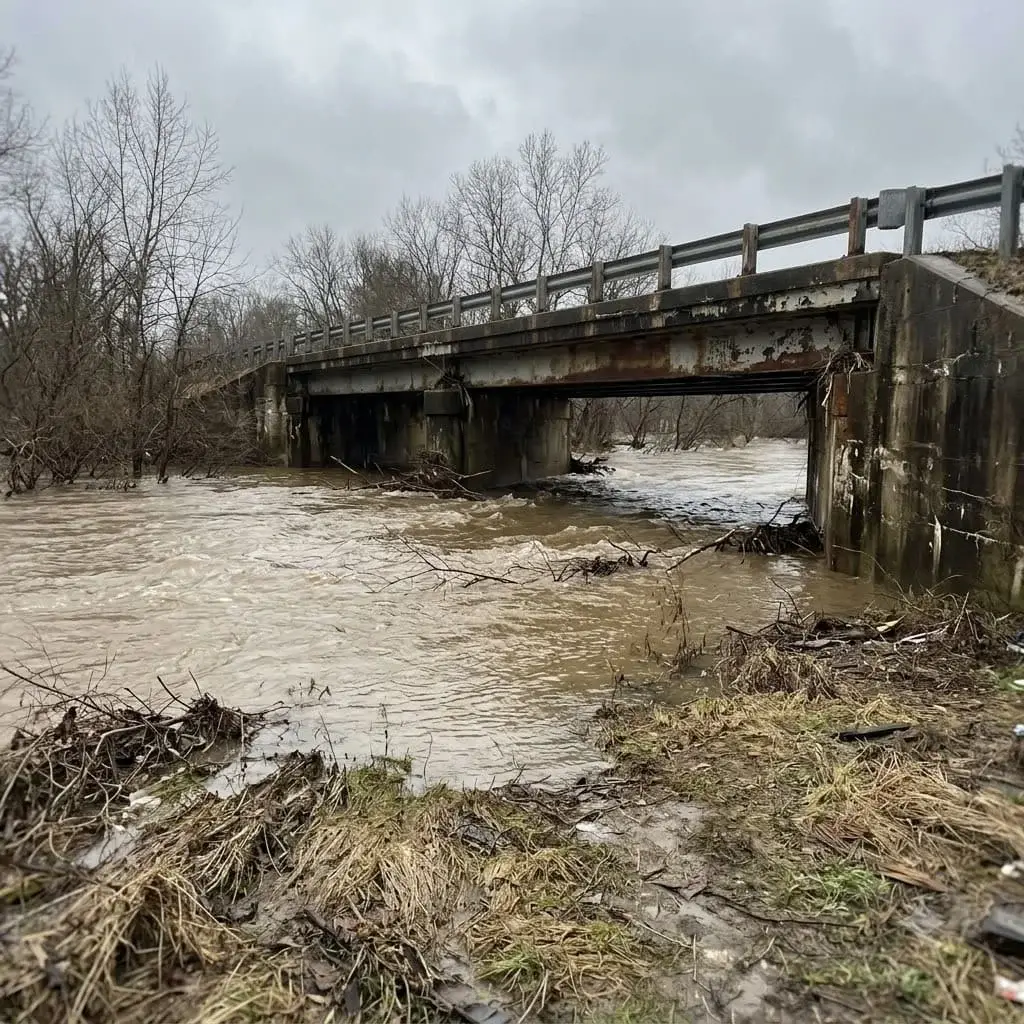
Northeast Ohio's soils formed in glacial till, a dense mix of clay, silt, and rock left behind by the glaciers. The USDA describes the Ellsworth series, a widespread till soil in northeastern Ohio, as having a subsoil that is 35 to 45 percent clay, with a perched water table 11 to 24 inches below the surface from November to May in most years. Clay lets water through slowly, so rain pools in the ground beside a foundation instead of draining down and away.
Saturated soil weighs a lot, and it pushes. That pressure against the wall is what forces water through cracks, mortar joints, and the seam where the wall meets the floor. This is why a basement can stay dry for weeks and then leak after two days of steady rain, or during a spring thaw when the ground is already full.
Older Foundations Give the Water a Way In
Many Warren basements were built to hold up a house, not to keep water out. Census figures show about 23% of Warren's occupied homes were built in 1939 or earlier and about 40% in the 1940s and 1950s, which adds up to roughly 63% before 1960. Basements from those years went in before modern waterproofing, and the mortar joints in older block and stone walls are the first place water gets through. Older homes often have clay drain tile around the footing too, and clay tile can silt up or crack over the decades, leaving groundwater with nowhere to go.
Freeze and Thaw Make It Worse
Winter widens the openings. Water gets into a crack or mortar joint, freezes, expands, and opens the gap a little more. The next thaw lets in more water, and the next freeze opens it again. A hairline crack in November is often a steady leak by spring.
Where the Water Is Coming In
Where the water shows up tells you a lot about the cause.
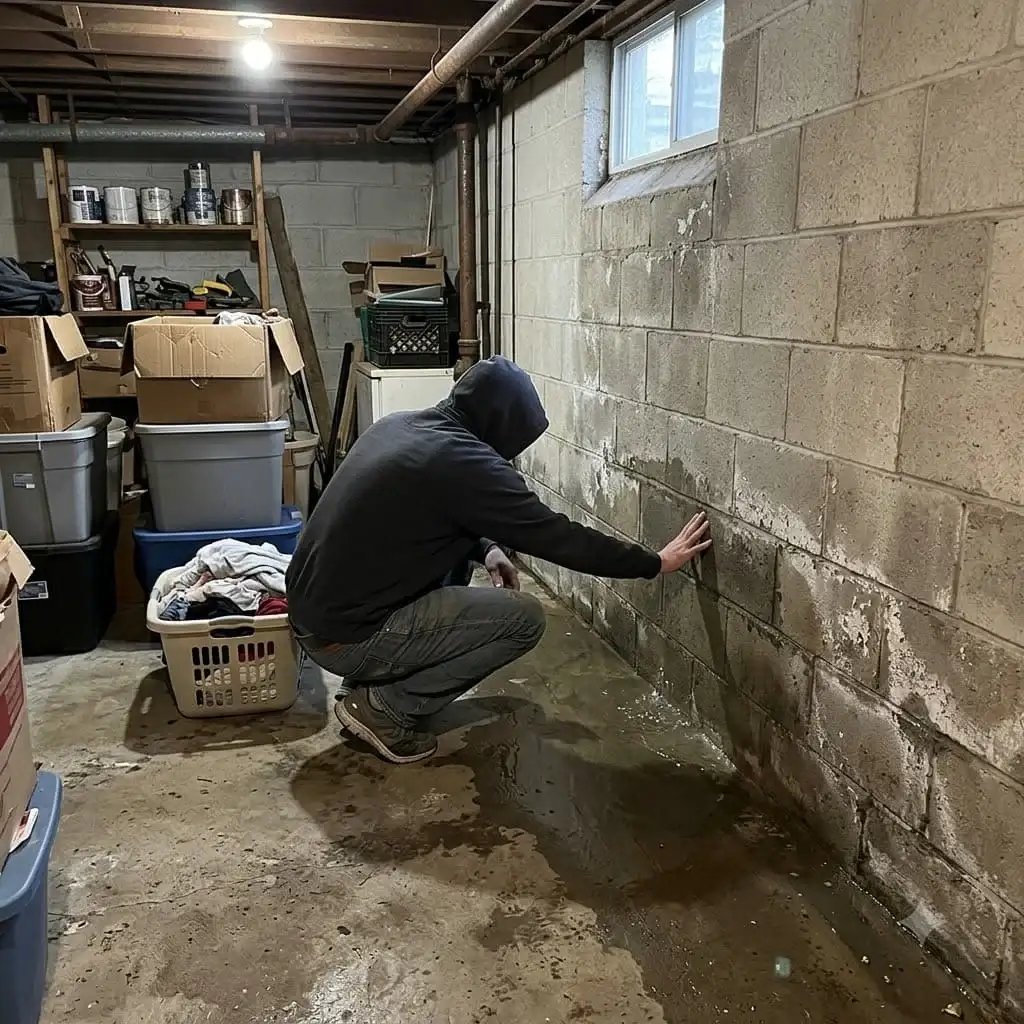
- At the floor-wall seam. This is the most common spot, because that joint is where pressure from the soil meets the lowest point of the basement. It's what interior drainage and a sump pump are built for.
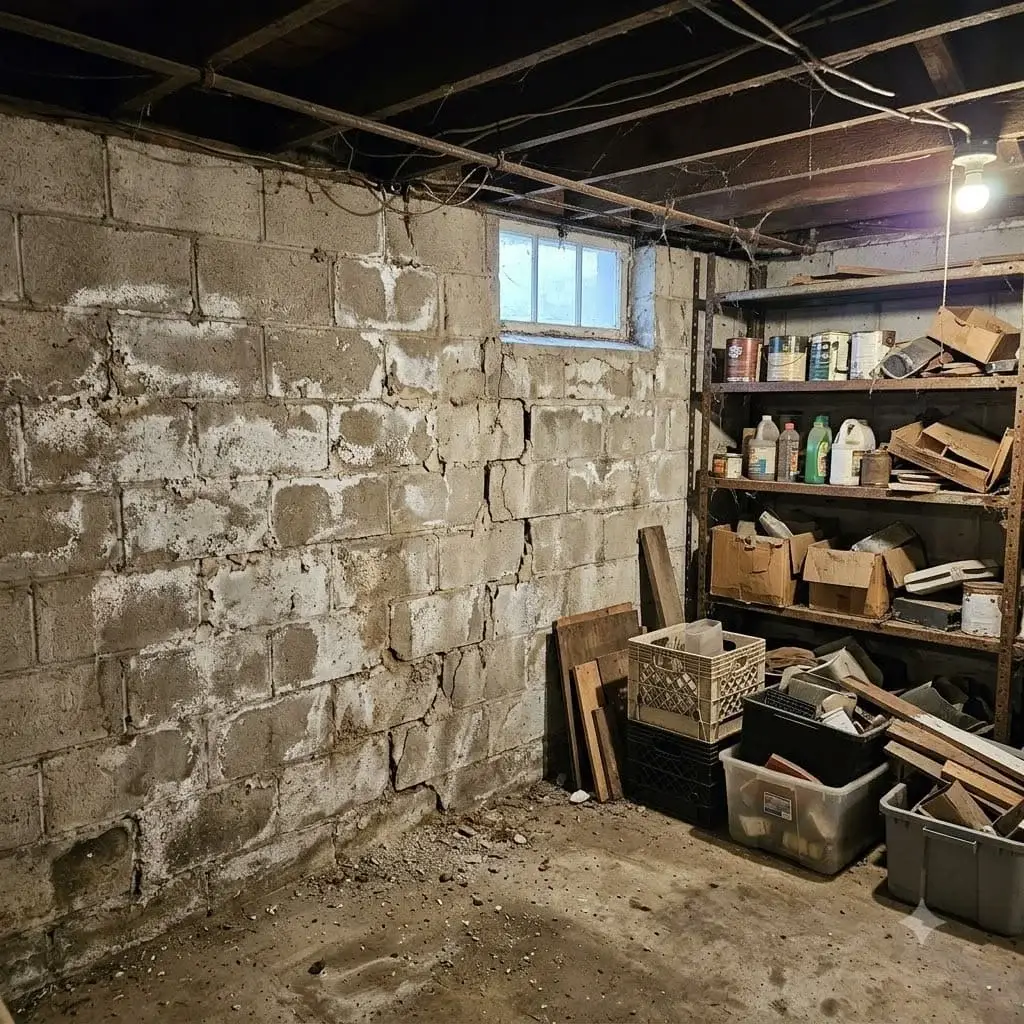
- Through the wall face. Damp patches or streaks on a block or stone wall mean water is moving through the wall itself, which often calls for exterior waterproofing when it's widespread.
- Through a crack. A single leaking crack can often be injected and sealed, but a horizontal or stair-step crack may mean the wall is moving. See basement wall repair.
- At a window well. Water collecting in a window well and entering through the window points to drainage at the well or poor grading outside.
- Through the floor. Water rising through the slab means groundwater pressure from below, and an interior drain with a sump handles it.
Things Worth Checking Outside
Some leaks start with the way water leaves the roof. Gutters that overflow or downspouts that empty beside the foundation put a lot of water against the wall in a storm. Soil that slopes toward the house sends surface water straight to it. Moving downspout discharge several feet away and regrading the soil so it slopes away from the wall reduces how much water the foundation has to handle. These steps help, and they don't replace drainage when the ground is saturated for months at a time.
What Actually Stops It
A lasting fix takes the pressure off the wall and gives the water a way out. For most Warren basements that means an interior drain and a sump pump with a battery backup, because a storm that floods a basement can also cut the power. Surface sealers and waterproofing paint rarely hold, since they cover the surface and leave the pressure behind them. When a wall leaks across its whole face or the original drain has failed, exterior waterproofing seals it from the outside. An inspection shows which one your foundation needs.
Frequently Asked Questions
Why does my basement only leak when it rains hard?
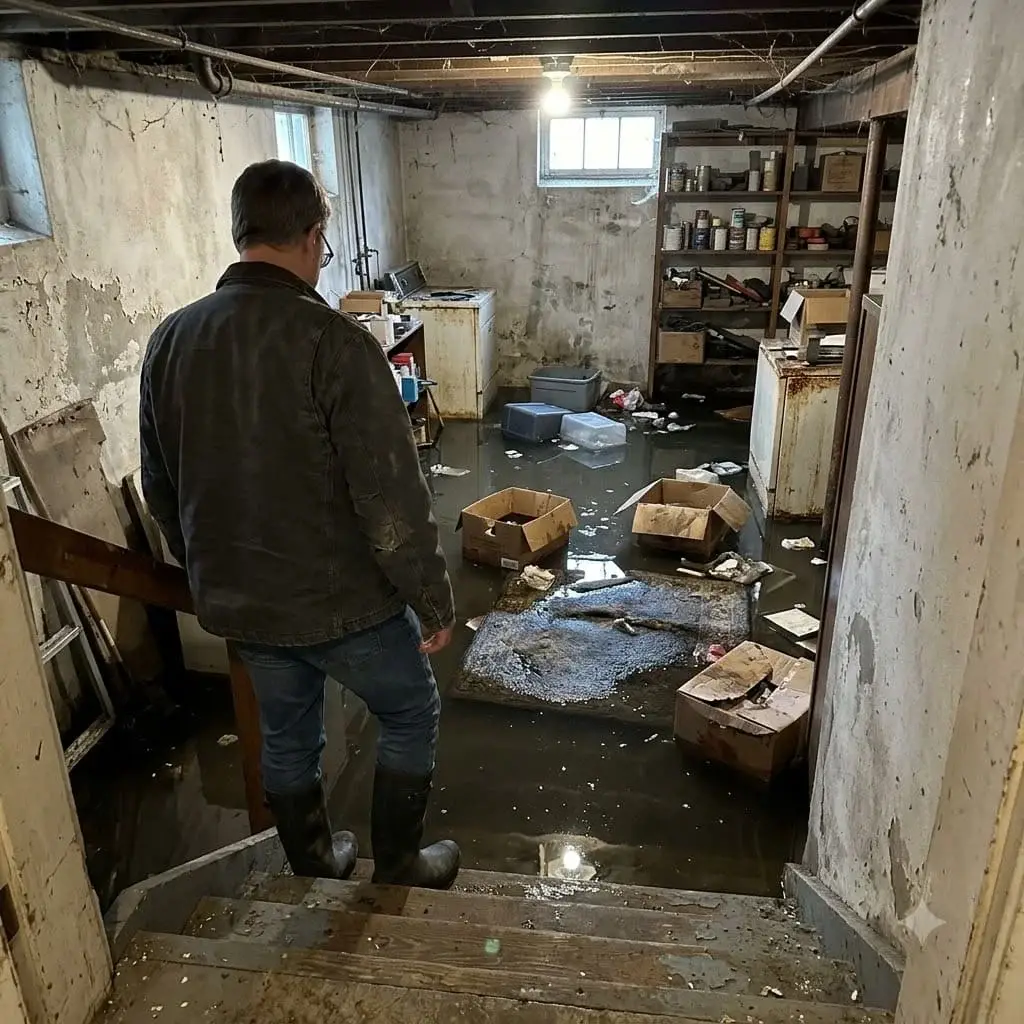
A basement usually leaks only in heavy rain when the soil around it fills up past its limit. Clay-rich ground drains slowly, so a light rain soaks in without trouble, but a steady or heavy one saturates the soil and builds pressure on the wall. When the water table rises, pressure forces water through cracks, joints, and the floor seam. The leak follows the weather because the pressure does.
Is a leaking basement a sign my foundation is failing?
A leak alone isn't a sign the foundation is failing. Most leaks come from water pressure finding cracks, mortar joints, or the floor-wall seam in an older wall. Cracks that widen, horizontal cracks, and walls that bow inward are different, because they mean the wall is moving. If you see those, have the wall inspected soon, since movement can continue.
Can I fix a leaking basement with waterproofing paint?
Waterproofing paint can slow light dampness on a wall that is otherwise dry, but it doesn't stop a leak caused by water pressure. The coating covers the surface, while the pressure builds behind it until the paint blisters, peels, or the water finds the floor seam the paint never reached. A lasting fix drains the water away. Paint is a finish, not a drainage system.
Will a sump pump stop my basement from leaking?
A sump pump stops standing water by sending it outside, but it works best as part of a drainage system. The pump needs a drain at the footing to collect the water that comes through the wall or rises at the seam, and it needs a discharge line that carries the water away from the house. A battery backup keeps it running when a storm cuts the power.
When should I call someone about a wet basement?
Call when water shows up more than once, when it follows heavy rain, or when you see cracks, bowing, or white residue on the walls. Standing water, a musty smell that won't go away, and a wall that has started to lean are the signs that need attention soon. An inspection finds where the water enters and what the basement needs.