How Interior Waterproofing Works
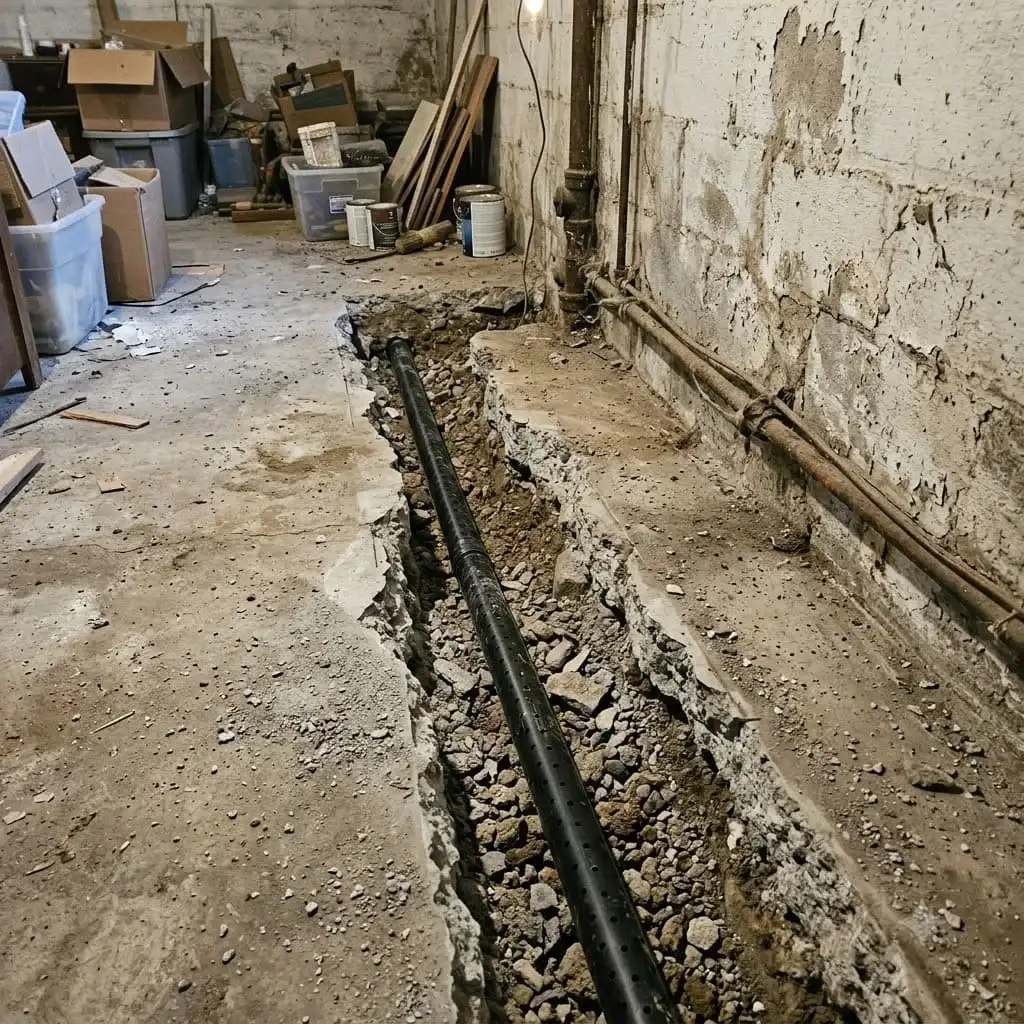
Interior waterproofing deals with water at the inside of the footing. We cut a channel in the slab along the wall, lay perforated pipe in gravel, and slope it to a sump basin where a pump sends the water outside. On block walls, we drill weep holes into the bottom course so water trapped inside the block drains into the system. The water still reaches the wall, and the system gives it a controlled path out. Details are on our page for interior drainage and sump pumps.
How Exterior Waterproofing Works
Exterior waterproofing stops the water before it reaches the wall. We dig down to the footing, clean and repair the wall, apply a waterproof membrane, add a drainage board, and set a new footing drain before backfilling. The wall stays dry because water never presses on it directly. Details are on our page for exterior basement waterproofing.
Side by Side
| Interior | Exterior | |
|---|---|---|
| Where the work happens | Inside the basement | Around the outside of the foundation |
| What it does | Collects water and pumps it out | Seals the wall and drains the soil |
| Disruption | Moderate, mostly indoors | High, digging around the house |
| Season | Any time of year | Limited by frozen ground and weather |
| Typical national cost | Roughly $3,000 to $12,000 | Roughly $7,000 to $18,000 |
| Fits best | Water at the floor joint or seeping through block | Walls leaking across the face, failed footing drains |
The cost ranges come from published 2026 national guides, and they are averages, not Warren quotes.
When Interior Is the Right Call
Interior drainage fits when water collects at the floor-wall seam, seeps through block, or rises through the floor. It suits finished basements, because the work is inside and doesn't disturb landscaping. It can go in during winter. It doesn't need a dig around the house, and it doesn't depend on an old clay drain tile that may have failed. For many Warren homes, it handles the problem at a lower price.
When Exterior Is the Right Call
Exterior waterproofing fits when water pushes against the wall across a large area, when the original footing drain has failed, or when the wall has cracks or damaged mortar that need repair from the outside. It also makes sense before finishing a basement, since it protects the wall itself. It's the bigger job, with digging, restoration, and a higher cost.
When It Takes Both
Some Warren homes need both. A wall that leaks across its whole face and also lets water in at the floor seam benefits from sealing outside and draining inside. And a wall that has bowed needs structural repair alongside whichever waterproofing method fits. An inspection sorts out the combination.
Why the Soil Matters
The soil decides how much water pressure the foundation faces. The USDA describes the Ellsworth series, a widespread glacial till soil in northeastern Ohio, as having a subsoil that is 35 to 45 percent clay, with a perched water table 11 to 24 inches below the surface from November to May in most years. Clay-rich ground holds water against walls for months, and the Warren area adds about 41 inches of precipitation and about 28 inches of snowfall a year. In ground like that, either method works when it is matched to where the water enters.
Frequently Asked Questions
Is interior or exterior waterproofing better?
Neither wins in every case, because they solve different problems. Interior drainage collects water that reaches the floor joint and costs less, while exterior waterproofing stops water at the wall and suits walls that leak across their face. Many Warren homes do well with interior drainage, and an inspection decides which one the foundation needs.
Does interior waterproofing leave the wall wet?
Interior waterproofing lets some water reach the wall, and the drain and sump carry it away before it spreads across the floor. The wall may stay damp near the base, and a dehumidifier handles the humidity that remains. If the wall itself needs sealing, exterior waterproofing keeps it dry.
Why does exterior waterproofing cost more?
Exterior work costs more because of the digging, the materials, and the restoration. We excavate down to the footing, repair and seal the wall, install a drain, and backfill and regrade. Interior drainage is mostly cutting the slab and setting pipe and a pump, which takes less labor and no excavation.
Can I do interior waterproofing in winter?
Interior drainage can go in any time of year, including winter, because the work is inside. Exterior waterproofing is limited by frozen ground, since we can't excavate frozen soil. If a home needs exterior work and it's winter, interior drainage can protect the basement until the ground thaws.
How do I know which one my house needs?
An inspection tells you. We look at where the water enters, how the walls are built, whether they have cracked or moved, and what the soil and drainage around the house are doing. Water at the floor seam usually points to interior drainage, while a wall that leaks across its face points to exterior work. We recommend the smaller fix when it will do the job.