
Our services
Interior Drainage & Sump Pump Installation in Warren, OH
We install interior drainage and sump pumps in Warren, Ohio to catch water at the inside of the footing before it spreads across your basement floor. About 63% of Warren's occupied homes were built before 1960, and an interior perimeter drain with a sump pump is the usual answer to the water pressure that builds against those older foundations. Call 123-456-7890 for a free estimate.
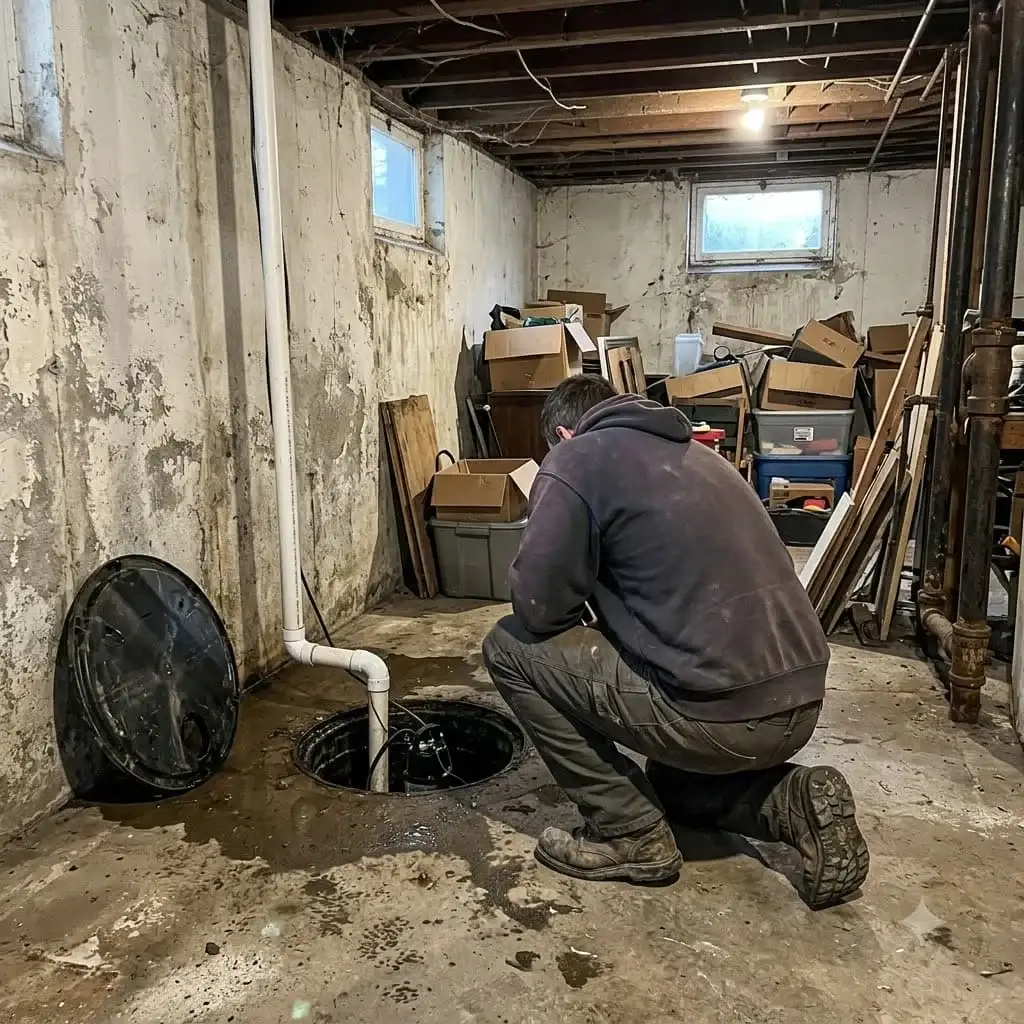
Interior drainage works where the water shows up. Water that comes through the wall or rises at the floor-wall seam drops into a channel cut beside the footing, runs along a perforated pipe to a sump basin, and gets pumped outside and away from the house. It's the least disruptive method, and it can go in any month of the year, including a Trumbull County winter when frozen ground rules out digging outside.
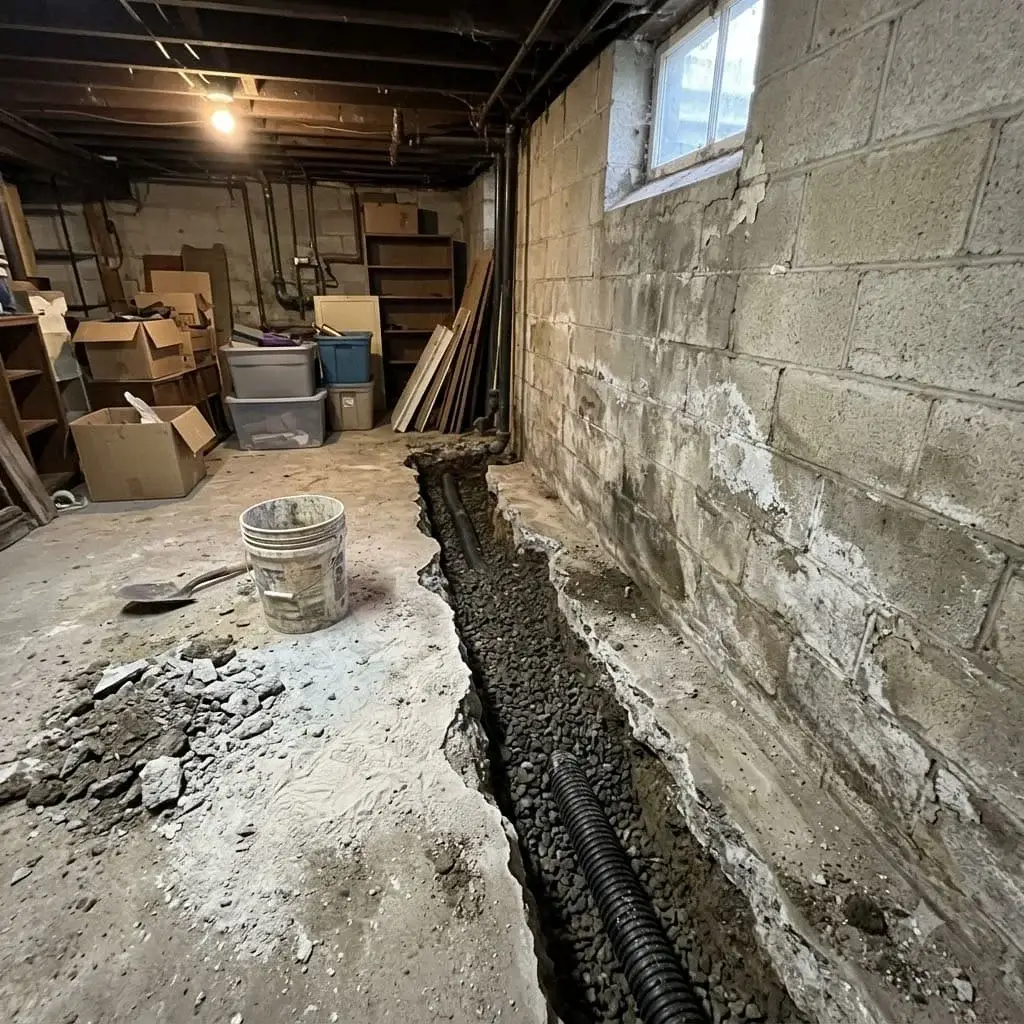
How We Install Interior Drainage
Most Warren installations follow the same four steps. First, we cut a narrow channel in the slab along the inside edge of the footing, covering the wet stretch of wall or the full perimeter. Second, on block walls we drill weep holes in the bottom course so water inside the hollow block drains into the channel instead of sitting in the wall. Third, we lay a perforated pipe in clean gravel, sloped toward the sump basin. Finally, we patch the channel with new concrete flush to the floor and test the system with water.
The sump basin goes at the lowest point of the basement, usually a corner or an unfinished room. The pump starts on its own when the water reaches a set level and sends it through a discharge line out to the yard. We run that line far enough from the house, and at the right slope, that the water can't circle back to the foundation. Where the discharge could tie into a municipal system, local rules decide what it can connect to, and we check them first.
When Older Drain Tile Has Stopped Working
Older homes often have clay drain tile around the footing, a ring of short clay pipes meant to carry groundwater away. Clay tile silts up and cracks over the decades, and when it fails, the water it used to move stays against the wall. An interior system doesn't rely on it. It collects water at the inside of the footing and sends it to its own sump, so the old tile stops deciding whether the basement stays dry. We leave the old tile in the ground and install the new system inside.
Sump Pumps and Battery Backup
The pump is the working part of the system, so the choice matters. A primary pump handles ordinary flow. A standard electric pump stops when the power goes out, and a storm heavy enough to flood a basement can also take down the power. That is the reason for a battery backup.
A backup pump keeps the sump running when the grid is down, which is when a basement is most likely to take on water. We size the backup to the home and the amount of water it sees, so the pump that runs on the worst night is built for it.
Dehumidifiers and Basement Humidity
Humidity is the one thing a drain doesn't fully solve. A drain and sump stop standing water, but a Warren basement can still feel damp and smell musty through a humid summer, because moisture moves through block and concrete as vapor, not just as liquid. A dedicated dehumidifier pulls that vapor out of the air and keeps the humidity low enough to hold off mold and the musty smell. We fit one where the moisture load calls for it, often alongside a drainage system in a basement that is finished or about to be.
Crawl Spaces and Window Wells
Crawl spaces and window wells take on water the same way a basement does, so we handle them as part of the same system. In a crawl space, we add drainage at the low point, a vapor barrier over the ground, and a dehumidifier where the moisture is high. At a window well, we put a drain at the bottom that ties into the interior system, plus a cover that keeps rain out.
Why Waterproofing Paint Isn't a Drainage System
Waterproofing paint is where many homeowners start, and it does one small job. Sealers and paints coat the inside face of the wall and can slow minor dampness on a wall that is otherwise dry. They don't relieve water pressure. When saturated clay-rich soil pushes against the foundation, the pressure builds behind the coating until it peels, blisters, or finds the floor-wall seam the paint never covered. On older block and stone walls, paint buys a season at best, while interior drainage deals with the pressure itself.
What Interior Drainage Costs in Warren
Interior drainage costs less than exterior excavation, and the price follows a few clear factors. Published 2026 national cost guides put interior waterproofing at roughly $3,000 to $12,000 and an installed sump pump at roughly $600 to $2,500. Those are national averages, not Warren quotes.
The length of wall we treat counts the most, since a drain along one wet wall costs far less than a full perimeter loop. The pump setup comes next, with a single primary pump at the low end and a primary pump plus battery backup higher. Only an on-site inspection can price a specific home.
Why Warren Homeowners Choose Us
- Built around Warren homes. We size systems for Trumbull County's older foundations and clay-rich soil, not a national template.
- A free, no-obligation quote. We inspect and give you a written price before any work begins.
- Appointments we keep. We show up when we say we will.
- The right-sized system. We match the drain length and pump setup to your water problem, and nothing more.
Work is performed by independent professionals. Permit rules differ between the City of Warren and the surrounding townships, so we confirm what your local building department requires before work starts.
Frequently Asked Questions
How long does interior drainage take to install?
Most interior drainage jobs in a Warren home take one to three days, depending on how much of the perimeter needs a drain. We cut the slab, set the pipe and gravel, place the sump basin, patch the concrete, and test the pump. The new concrete needs a little time to cure, but the system works right away. A full-perimeter job in a larger basement runs toward the longer end.
Do I really need a battery backup sump pump?
A battery backup matters because the storms that flood basements can also cut the power, and a standard sump pump stops the moment the grid goes down, just as the water is rising fastest. A backup pump keeps running on battery through the outage. For a basement that takes on water often, or a finished one worth protecting, we treat the backup as part of the system and not an upgrade.
Will an interior drain get rid of a musty smell?
An interior drain stops standing water, but a musty smell usually comes from humidity, which is a separate problem. Moisture moves through block and concrete as vapor even after the liquid water is handled. A basement dehumidifier pulls that vapor out of the air and holds the humidity low enough to stop mold and odor. We often pair one with drainage in a Warren basement that will be used or finished.
Is waterproofing paint a cheaper option?
Waterproofing paint costs less up front but doesn't do the same job. It coats the wall surface and can slow light dampness, but it can't relieve the pressure that pushes water through a foundation after heavy rain or snowmelt. On older block and stone walls, the coating peels or blisters within a season or two. Interior drainage deals with the pressure itself, which is why it lasts where paint doesn't.
Where does the sump pump water go?
The pump sends water through a discharge line that leaves the house and releases it in the yard, well away from the foundation. A discharge that dumps beside the wall puts the water back into the soil and back into the basement. We run the line far enough out, and with the right slope, that the water drains away. If a home's plumbing connects to a municipal system, local rules decide what the discharge can tie into, and we confirm them first.
Do you have to remove my old clay drain tile?
We don't need to remove old clay drain tile to put in an interior system. The interior drain collects water at the inside of the footing and sends it to its own sump basin, so it works whether the old tile outside still runs or has silted up. That means no digging around the house for a standard interior job. If the old tile is the main source of the problem, the inspection will show whether exterior work makes sense too.
Get a Free Estimate
For interior drainage and sump pump installation in Warren, call 123-456-7890 for a free estimate. Contact us or see the full service area.